
Why Sniffing Is So Important for Your Dog's Brain
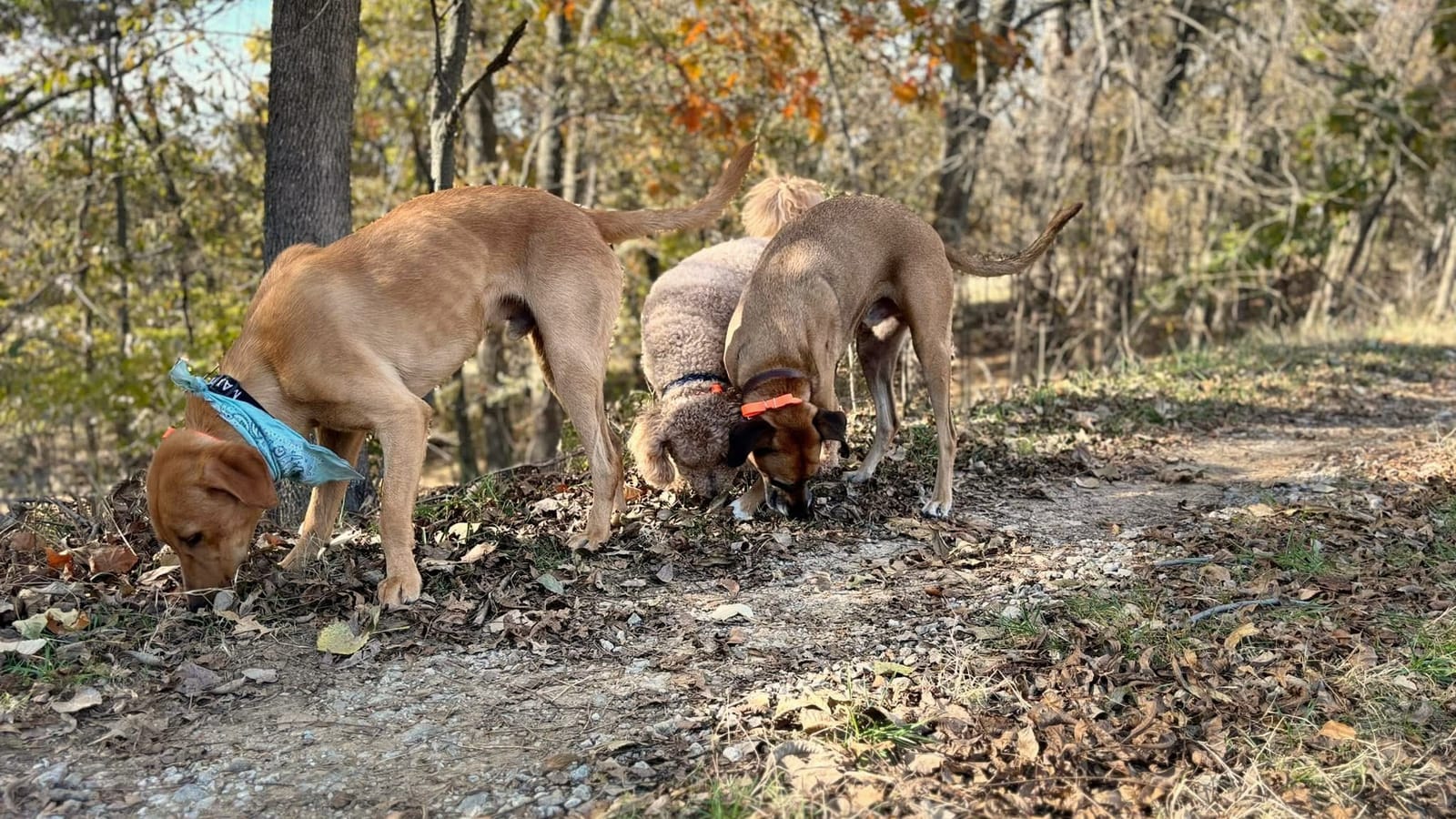
From neighborhood gossip to brain science, here's why your pup's nose deserves a little more time to explore.
Imagine walking into a room full of people. What's the first thing you do? Do you admire the decor, notice what everyone is wearing, search for a familiar face, or immediately locate the food and drink table? (No judgment here. We all have our priorities!)
Without even realizing it, you're already gathering information about the space around you. You're taking in the sights, sounds, and familiar faces, slowly piecing together what's happening and where you fit into it.
Now, imagine walking into that same room and immediately dropping to your hands and knees to sniff the furniture, the carpet, and maybe even a few of the guests.
A little strange, right?
You probably wouldn't learn much beyond the fact that someone has fantastic taste in laundry detergent and poor Harry could really use a shower.
But here's where things get interesting.
While we primarily rely on our eyes to take in the world around us, our dogs experience things a little differently. Their noses are one of their most powerful tools for gathering information, exploring their environment, and making sense of the world.
So, the next time your pup insists on investigating the same patch of grass for what feels like an eternity, there might be a little more going on than you think.
Let's talk about it!
Anatomy 101: The Science Behind the Sniffer
Before we dive into how our fur babies use their noses to explore, let's first take a look at what makes their sniffers so impressive!
Our pups are equipped with specialized nasal anatomy that makes scent detection remarkably effective.
Have you ever noticed those tiny slits on the sides of your dog's nose? Those are called lateral nasal slits, and they're actually part of what makes your pup's sniffer so impressive! While air enters through the front of their nostrils, these little openings help direct exhaled air out to the sides, allowing your dog to keep investigating a scent without constantly blowing it away.
Pretty clever, right?
But the incredible engineering doesn't stop at their noses. What happens once those scents reach the brain is just as interesting.
In a 2022 study titled “Extensive Connections of the Canine Olfactory Pathway Revealed by Tractography and Dissection,” Erica F. Andrews and her fellow researchers used advanced MRI technology and anatomical dissection to investigate how a dog's sense of smell connects to different regions of the brain.
What they discovered was fascinating! The researchers identified extensive pathways connecting the olfactory bulb to several brain regions, including areas associated with memory, emotion, and even vision. These findings help us better understand just how extensively a dog's sense of smell is connected to other parts of the brain.
What this tells us is that while we're trying to get in our steps, our pups are exploring the world around them on a chemical level. There's a whole lot more going on than simply wondering, “Who peed on my stop sign?”
But with that in mind...
Who DID pee on my stop sign?!
What Is Your Dog Actually Learning When They Sniff?
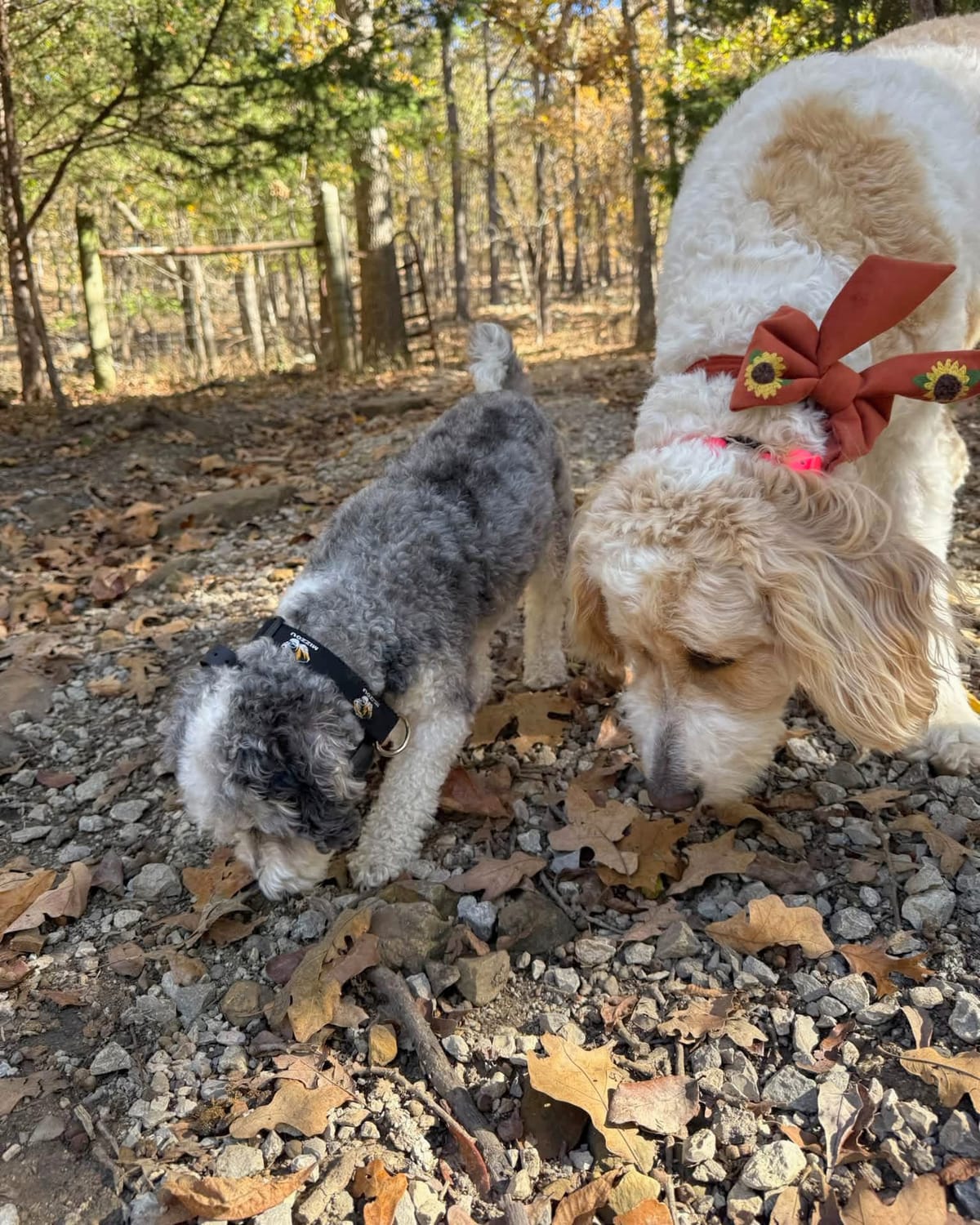
When it comes to figuring out the answer to that question, there are three areas worth exploring: environmental information, social communication, and memory.
Who was here? Who are they? And have we crossed paths before?
Your pup's ability to detect scents, even those left behind before you ever planned your walk, is quite remarkable. They don't necessarily need to see another animal pass by to investigate evidence that someone else has been lurking about.
Scents don't simply disappear the moment their source walks away. Odor molecules can linger in the environment, and factors such as wind, temperature, humidity, and even the surfaces around them can influence how those scents travel and remain detectable.
So, while we're busy enjoying the scenery, our dogs might already be investigating evidence of visitors we never even knew were there.
Again, our question presents itself: Who did this?
During an encounter with another dog, you may notice your pup turning to investigate the other dog's scent, following their nose for a little more information.
I do the exact same thing when the waiter walks by: a juicy steak, garlic mashed potatoes, and is that asparagus?
(Now I'm hungry. Time for a snack break!)
However, your pup isn't simply investigating what the other dog had for breakfast. They're gathering information about the dog itself.
Sniffing one another is a bit like a dog's handshake. It's a natural part of canine social communication and can help dogs learn about one another during introductions. Not only is it normal for them, but it can be an important part of an appropriate greeting.
Of course, just like people, not every dog wants to be greeted by a stranger, so paying attention to their comfort and body language is equally important.
Now that they've investigated their environment and sniffed for the who, there's another fascinating ability to consider: their memory.
Similar to the way we recognize familiar faces, our pups can recognize familiar scents. And research suggests that their scent-related memories can involve more than simple recognition.
In a 2019 study, researchers Ka Ho Lo and William A. Roberts investigated how dogs remembered odors associated with particular locations and times. Their findings provided evidence that dogs can retain information about what they smelled, where they encountered it, and when it occurred.
This means a familiar scent may be more than just another interesting smell. It could be connected to previous experiences, places, or individuals they've encountered before.
Pretty impressive for an animal who occasionally forgets that they've already eaten breakfast!
So, when your pup stops to investigate that suspiciously familiar stop sign, perhaps they're recognizing a scent from an old acquaintance.
And suddenly, our mystery has a suspect.
Max.
Max peed on my stop sign.
They'll have a conversation through the fence about that one later.
Can Sniffing Actually Make Dogs Happier?
As it turns out, there's some pretty interesting research suggesting that sniffing might do more than help our dogs investigate the world around them!
In 2019, researchers Charlotte Duranton and Alexandra Horowitz conducted a study titled “Let Me Sniff! Nosework Induces Positive Judgment Bias in Pet Dogs.” Over the course of two weeks, one group of dogs participated in scent-based activities, while another practiced traditional heelwork.
The results? Dogs who participated in nose work showed signs of a more optimistic response when faced with uncertainty, while the heelwork group didn't show the same change.
Now, before we start declaring sniffing the secret to eternal happiness, there's a little more to understand.
This doesn't mean that every dog who stops to smell a flower is automatically happier. Instead, the research suggests that giving dogs opportunities to use their noses through structured scent activities may have positive effects on their emotional well-being.
Alright, enough of the science. Lecture Hall has concluded.
At the end of the day, we all want our dogs to live happy, fulfilling lives, full of enrichment, exploration, and opportunities to simply be dogs.
At A Peaceful Pack, one of our favorite ways to encourage that exploration is through our Nature Walks.
These walks provide a structured, supervised environment where our pups can investigate the world around them. With farm animals, ponds, wildlife, and plenty of acreage at the ranch, there's no shortage of interesting sights, smells, and secrets waiting to be discovered.
And let me tell you, every pup approaches the adventure a little differently!
You might have a "sprint down the hill and back" kind of pup, a "sprint-sniff-sprint-sniff" adventurer, a "this singular patch of grass needs my full attention" investigator, or even a "hold on...someone's barbecuing tonight!" enthusiast.
But regardless of which category your pup falls into, during their Nature Walk (typically 20 minutes when weather and conditions allow), they get the opportunity to explore, investigate, and enjoy being themselves.
No expectations of covering a certain distance or setting a new personal record.
Just an opportunity to have fun, explore, and be safe.
And while we're fortunate enough to have plenty of land for our pups to explore, you don't need a ranch, a pond, or a herd of farm animals to give your own dog that same opportunity.
Sometimes, all it takes is slowing down and letting them investigate the world right outside your front door.
Sometimes the Journey Is the Destination
Now, does this mean we should stop every three steps to let our pups investigate every blade of grass, questionable puddle, and suspicious-looking bush?
Not necessarily. We'd probably never make it home!
But what we can do is make a little room in our routines for our dogs to experience the world in the way that comes most naturally to them.
Maybe that means setting aside a few extra minutes at the end of your evening walk, relaxing the pace, and giving your pup the opportunity to follow their nose. Or perhaps it's an afternoon spent exploring a new trail, playing a game of "find it" in the backyard, or simply taking the scenic route home.
At A Peaceful Pack, we believe there's value in both structure and freedom. Our dogs need guidance, boundaries, and opportunities to practice good manners, but they also deserve moments where there isn't a task to complete or a destination to reach.
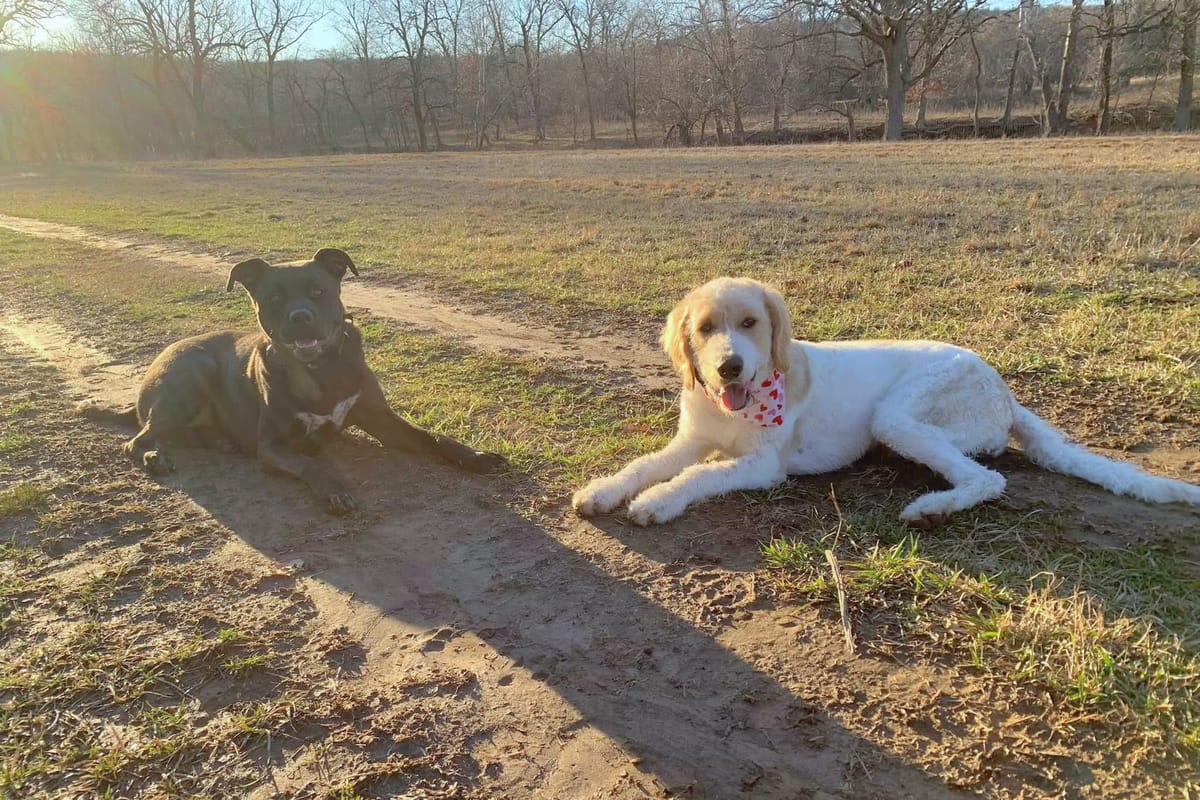
Sometimes, the most meaningful part of a walk isn't how far you've traveled. It's everything your dog got to experience along the way.
So the next time you're out enjoying the weather, strolling through the neighborhood, or visiting your favorite park, don't be surprised when your pup insists on stopping to investigate that familiar patch of grass.
After all, they've got some catching up to do.
The Neighborhood News just came out, and apparently, Max is making headlines again!