
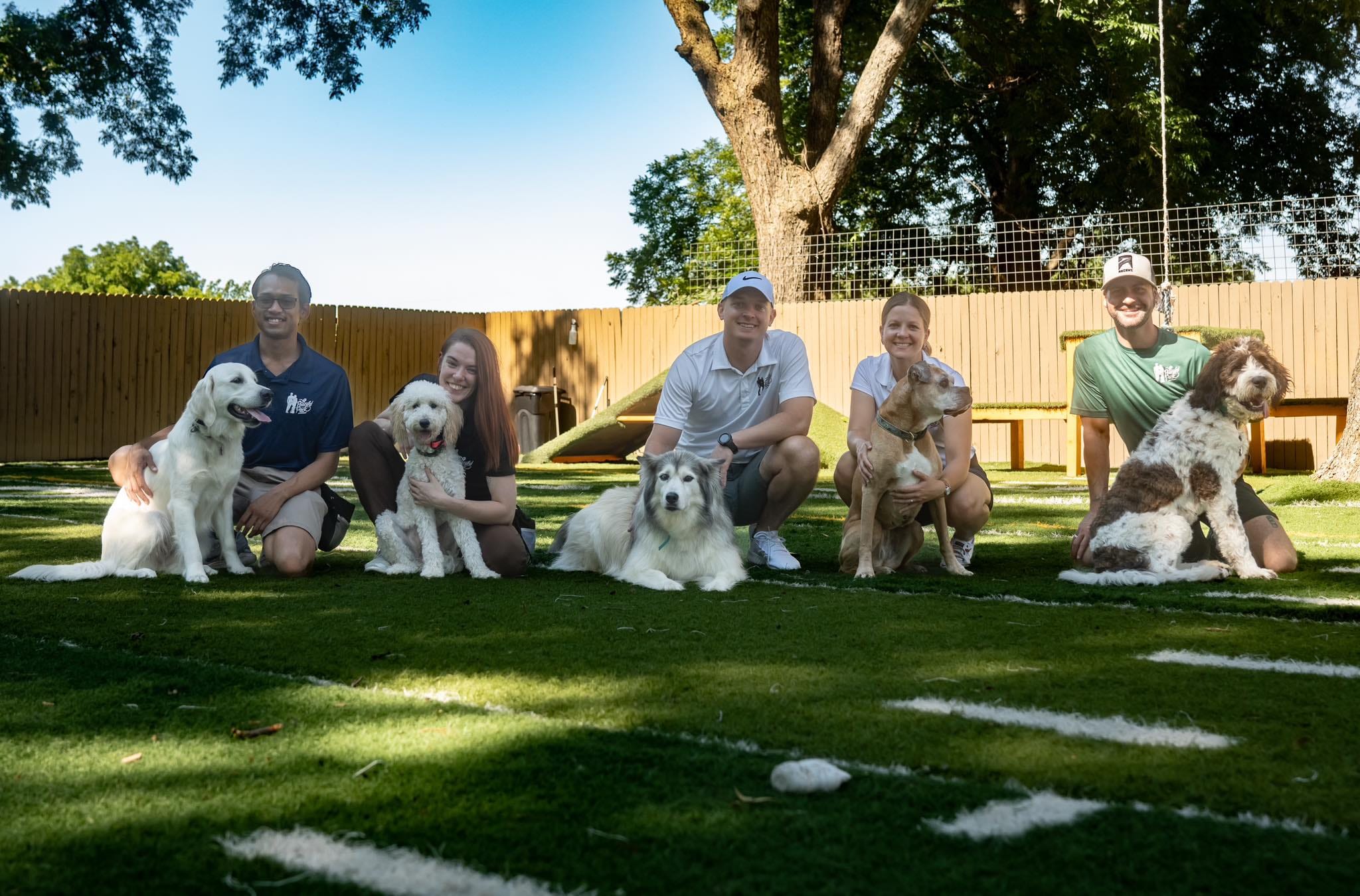
Dog Training Near Tulsa, OK
Good training begins with communication.
We help dogs build practical skills and calmer habits, then teach owners how to continue that work at home. And you never have to drive to Skiatook — we pick your dog up at your door, bring them back, and hold your owner lessons at your home.
★★★★★ 200+ Five-Star Reviews · 180-Acre Ranch · Trainer-supervised · BBB A+ Accredited
Watch the transformations
Mav & Gus — lunging and fighting with each other. Four weeks later: calm on a loose leash, side by side.
Ava — biting, jumping, zero listening at 4 months. Three weeks later: calm through a busy store.
Finn — practicing calm in public around people and distractions.
Zoe — puppy board & train. The foundation, before and after.
Swipe for more →
Board & Train programs
Two weeks teaches the basics. Our flagship three-week program adds OUT (moving out of a room or giving people space when asked), more public practice and more time using those skills in daily life.
Your dog splits time between our Skiatook ranch and a trainer's home: structured training and supervised socialization at the ranch, one-on-one care and household practice at home.
Real-World Training
The basics, plus OUT (giving people space when asked), public outings and more practice with distance, duration and distractions. The third week revisits the same lessons in the places your dog needs to use them.
Explore Real-World Training →Obedience Training
Come when called, stop pulling, and learn sit, down, place and heel. A clear starting point for dogs who need basic commands and leash manners.
Explore Obedience Training →Puppy Training
Potty training with a clear signal to go outside, comfort with petting and handling, recall, leash manners, crate routines and supervised socialization.
Explore Puppy Training →Aggression & Reactivity
A plan for growling, lunging, fighting or bite histories, with controlled practice and owner coaching on handling and management.
Explore Aggression Training →Separation Anxiety
Panting, howling, destruction or panic when alone. We build settling and manageable alone-time practice, then teach you the routine and how to respond if stress returns.
Explore Separation Anxiety Training →Therapy & Emotional Support
Practice for calm outings in dog-friendly workplaces, stores and everyday errands, or preparation for invited therapy visits. Includes handler coaching.
Explore Therapy & ESA Training →Not sure which fits? We'll review your dog's needs and explain the differences on your free consultation call.
Anxious, reactive or easily wound up? See how calm comes first in our vagus nerve dog training. New puppy? Start at home with our free 5-Day Puppy Boot Camp.
What comes with every program
Training is half the job. The other half is you, so every program builds your skills too.
Weekly owner lessons at your home
Weekly 60–80 minute lessons help you practice the commands, handling and routines your dog is learning.
E-collar system training
You learn how to use your e-collar system and receive take-home training materials. E-collar equipment is not included. We explain suitable tools before enrollment. Build your e-collar kit →
Photos and videos on training days
Your dog's trainer sends updates Monday through Friday, on their training days, and explains what's happening and why.
Weekends at home
Most families have their dog home for the weekend: we bring them home Saturday (some prefer Friday) and pick them back up Monday. You practice together and live the new routine — then tell us what felt solid and what didn't. That feedback is how we customize the rest of the program. It's your choice; your dog can also stay with us over the weekend.
Public group walks
Your dog practices around people, bikes and other dogs with their trainer.
Lifelong trainer access
Call, text, or email your trainer whenever something comes up after graduation.
Graduate perks
Trained dogs get access to our Day Stay and boarding community, with pickup at your home.
A training session at the ranch
Several dogs and handlers share one stretch of ranch road. The dogs practice calm sits and downs while people and other dogs move around them.
A short, silent clip. Press play to watch.
Behaviors we work on
Find what sounds familiar. See how we work on it, what you'll practice at home and which program is usually the starting point.
Read the buildupLook → Lock → Load → Launch
- Look
- Your dog notices something.
- Lock
- Their attention gets stuck on it.
- Load
- Their body gets ready to react.
- Launch
- They bark, lunge or rush forward.
Looking is normal. We teach you to spot a fixed stare or tense body early and practice what to do if your dog reacts. Dogs do not always move through every stage.
The response we work towardEngagement → Avoidance → Acceptance
- Engagement
- Your dog gets stuck on something and reacts.
- Avoidance
- They learn to look or move away and reconnect with you.
- Acceptance
- Our goal: they notice, feel more comfortable and carry on.
Our approach can include corrections intended to reduce aggressive behavior while we teach a safer response. We also use rewards and repeated practice your dog can handle.
Punishment means a consequence reduces future behavior. We explain our methods before enrollment. We work at your dog's pace and look for a relaxed body and recovery alongside quieter behavior.
Click a card to see how we help. On your phone, tap a card.
Struggling to settlePacing, constant scanning or following every movement around the house.3 weeks
How we work on it
We teach your dog to slow down, soften their body and rest. We look for easier breathing, relaxed muscles and less scanning, then reduce our help as your dog learns to settle independently.
Your part at home
You learn to recognize settling and build it into routines you already have.
For puppies 14 weeks and older, these skills fit into our 3–4 week Puppy Training program. Aggression or separation distress changes the recommendation.
Distress linked to being left alone follows the 4-week separation-anxiety pathway.
Aggression toward other dogsGrowling, snapping, lunging, biting or fighting around other dogs.4 weeks
How we work on it
We work from Engagement → Avoidance → Acceptance. We use corrections intended to reduce aggressive behavior while teaching your dog to look away, create space or check in. Repeated, manageable practice builds toward confidence and calmer responses around other dogs.
Your part at home
You practice safe handling and learn which situations still need management.
Training does not promise unrestricted dog interaction or removal of bite risk.
Leash pullingDragging you down the sidewalk or turning every walk into a tug of war.2 weeks
How we work on it
We teach your dog to notice your movement, follow leash guidance and walk with a loose leash. We reward the right position, then practice stops, turns and distractions as understanding grows.
Your part at home
You practice leash handling, timing and the difference between walking and a sniff break.
For puppies 14 weeks and older, these skills fit into our 3–4 week Puppy Training program. Aggression or separation distress changes the recommendation.
Barking & lunging on leashExploding at dogs, people, bikes or movement while you are out walking.4 weeks
How we work on it
We teach Look → Lock → Load → Launch so you can spot the buildup early. Your dog practices looking away, reconnecting with you and recovering. You also rehearse handling for barking or lunging, with the goal of calmly noticing and accepting distractions.
Your part at home
You learn early signals, practice handling and training tools, and rehearse what to do if your dog reacts on a walk.
Separation anxietyHowling, panting, pacing, destruction or panic before you leave, while you're gone, or when your dog is alone or in a kennel.4 weeks
How we work on it
We observe your dog alone or in a kennel, then build settle and independence in manageable steps. We work toward easier breathing, a relaxed body and comfortable head-down rest when appropriate. Departure routines and owner coaching carry the practice into your home.
Your part at home
You learn to read your dog's body language, spot early signs of trouble and guide relaxation when they're alone.
Four weeks describes the program, not a guaranteed cure. Self-injury or severe panic needs prompt veterinary support.
Demand barking & whiningGetting loud for attention, play, food or the next thing they want.2 weeks
How we work on it
We first check that your dog's needs are met, then teach a quieter way to ask or wait. We reward that alternative and help you change the responses that have kept the barking useful.
Your part at home
You practice rewarding quiet behavior and responding consistently.
For puppies 14 weeks and older, these skills fit into our 3–4 week Puppy Training program. Aggression or separation distress changes the recommendation.
Panic, pain or distress is assessed separately from ordinary demand behavior.
Jumping on peoplePaws on your clothes, guests getting jumped on and greetings that get out of hand.2 weeks
How we work on it
We teach that greetings happen with four paws on the floor. Your dog practices a clear alternative, such as standing calmly or sitting, while we build consistency with different people and levels of excitement.
Your part at home
You practice staying still and withholding attention for jumping, rewarding four paws down and applying the corrections we teach.
For puppies 14 weeks and older, these skills fit into our 3–4 week Puppy Training program. Aggression or separation distress changes the recommendation.
Puppy biting & mouthingSharp teeth on hands, sleeves, shoes and anything that moves.3 weeks
How we work on it
We teach appropriate play and chewing outlets, clear boundaries around skin and clothing, and calmer ways to interact. We also look at rest and overexcitement so practice matches what your puppy can handle.
Your part at home
You learn what to offer, what to interrupt and how to keep play consistent.
Threatening behavior or serious bite risk is assessed for the 4-week aggression program, even in a young dog.
Not coming when calledIgnoring their name, wandering off, chasing squirrels or rabbits, or coming back only when they feel like it.2 weeks
How we work on it
We teach COME to mean: look toward the person calling, then move all the way to them. We start with close, supported practice, then add distance and distractions without treating one good response as permanent mastery.
Your part at home
You learn how to practice safely and reward a complete return.
For puppies 14 weeks and older, these skills fit into our 3–4 week Puppy Training program. Aggression or separation distress changes the recommendation.
Guarding food, toys or objectsAlso called resource guardingStiffening, growling, snapping or biting when a person or another dog approaches a valued item.4 weeks
Also called resource guarding
How we work on it
We teach your dog to leave a valued item and move away calmly. Planned daily practice builds toward choosing that response with less prompting. Clear boundaries and consistent household rules help reduce repeated conflict.
Your part at home
You learn to spot guarding early, prevent conflicts and guide your dog away using the handling you practice with us.
Counter surfingChecking countertops, reaching for food or stealing things from the kitchen.2 weeks
How we work on it
We teach your dog to turn away from counters and leave food alone. Safe practice, clear boundaries and rewarded alternatives help the dog learn what to do while you cook or move through the kitchen.
Your part at home
You learn how to manage access and practice without leaving tempting food unattended.
For puppies 14 weeks and older, these skills fit into our 3–4 week Puppy Training program. Aggression or separation distress changes the recommendation.
Rushing doors & gatesBolting through the front door, kennel door, gate or car door.2 weeks
How we work on it
We teach your dog to pause at a boundary and wait for a clear release. We practice with safe setups and gradually add movement and distractions so the rule makes sense in more than one doorway.
Your part at home
You practice the same pause-and-release routine at home.
For puppies 14 weeks and older, these skills fit into our 3–4 week Puppy Training program. Aggression or separation distress changes the recommendation.
Begging during mealsHovering at the table, pawing for food or crowding you while you eat.2 weeks
How we work on it
We teach a useful mealtime routine: move away from the food, stay on a designated spot or settle nearby. We reward that behavior and practice while meals are happening so the lesson fits your home.
Your part at home
You practice the routine and avoid rewarding begging with food or attention.
For puppies 14 weeks and older, these skills fit into our 3–4 week Puppy Training program. Aggression or separation distress changes the recommendation.
Chewing furniture & belongingsGnawing on furniture, shoes, cushions or other things that aren't chew toys.2 weeks
How we work on it
We limit chances to rehearse destructive chewing, teach your dog to leave the item and provide an appropriate chewing outlet. We then practice supervised choices and increase freedom as the dog shows readiness.
Your part at home
You learn what to supervise, what to put away and which alternatives to offer.
For puppies 14 weeks and older, these skills fit into our 3–4 week Puppy Training program. Aggression or separation distress changes the recommendation.
Chewing tied to distress when left alone belongs in the 4-week separation-anxiety pathway.
Stealing socks, shoes & objectsGrabbing belongings and turning the next few minutes into a chase game.2 weeks
How we work on it
We teach your dog to leave objects, release an item when asked and choose an appropriate outlet. We also change the routine that makes stealing rewarding, including the chase that often follows.
Your part at home
You practice a clear leave-and-release routine and keep unsafe items out of reach.
For puppies 14 weeks and older, these skills fit into our 3–4 week Puppy Training program. Aggression or separation distress changes the recommendation.
Swallowing objects needs veterinary attention. Guarding or threatening over items routes to the 4-week aggression program.
Getting into the trashSearching bins, stealing scraps or helping themselves to things that could be unsafe.2 weeks
How we work on it
We secure access while teaching your dog to leave the area and choose an appropriate activity. Supervised practice helps build clear kitchen boundaries before we increase household freedom.
Your part at home
You learn how to manage access and reinforce the same boundaries at home.
For puppies 14 weeks and older, these skills fit into our 3–4 week Puppy Training program. Aggression or separation distress changes the recommendation.
Suspected ingestion of something dangerous needs veterinary attention, not a training session.
Digging holesTurning the yard, garden beds or fence line into a digging project.2 weeks
How we work on it
We look at when and where digging happens, reduce unsupervised rehearsal and teach your dog to disengage. Appropriate activity and consistent yard boundaries become part of the plan rather than relying on a command alone.
Your part at home
You learn how to supervise yard time and build freedom gradually.
For puppies 14 weeks and older, these skills fit into our 3–4 week Puppy Training program. Aggression or separation distress changes the recommendation.
Barking at the doorbellThe bell rings, someone knocks and the whole house erupts.2 weeks
How we work on it
We practice the sound at a manageable level and teach a clear door routine, such as turning to you or moving to place. We gradually add arrivals while rewarding the response you want.
Your part at home
You practice the arrival routine before real guests make it harder.
For puppies 14 weeks and older, these skills fit into our 3–4 week Puppy Training program. Aggression or separation distress changes the recommendation.
Threatening, charging or biting at arrivals routes to the 4-week aggression program.
Pawing & pushy attentionNudging your hand, climbing into your space or insisting that attention happen now.2 weeks
How we work on it
We teach your dog to approach politely, wait and accept a pause in interaction. We show you how your attention can reward the behavior you want instead of keeping the pushy pattern going.
Your part at home
You practice giving attention for polite approaches and clear invitations.
For puppies 14 weeks and older, these skills fit into our 3–4 week Puppy Training program. Aggression or separation distress changes the recommendation.
Furniture & personal-space boundariesJumping onto furniture uninvited or refusing to move out of your space.2 weeks
How we work on it
We help you establish clear household rules and teach your dog to move away or go to an allowed spot when asked. The goal is an understandable routine that your household can maintain.
Your part at home
You choose the rules and practice using them consistently.
For puppies 14 weeks and older, these skills fit into our 3–4 week Puppy Training program. Aggression or separation distress changes the recommendation.
Growling, snapping or guarding furniture belongs in the 4-week aggression pathway.
Not staying on placeGetting up the moment you move, open the door or stop paying attention.2 weeks
How we work on it
We teach the spot first, then build time, distance and distractions in manageable steps. As your dog understands, we reduce hands-on help and practice while people are doing ordinary things nearby.
Your part at home
You learn when to reward, when to reset and when to make the next step easier.
For puppies 14 weeks and older, these skills fit into our 3–4 week Puppy Training program. Aggression or separation distress changes the recommendation.
Zigzagging & distracted walksBouncing between smells, crossing in front of you and barely noticing the person holding the leash.2 weeks
How we work on it
We build attention to the handler and a clearer walking routine. Your dog learns when it is time to walk with you and when a release gives permission to sniff and explore.
Your part at home
You practice walking, stopping, turning and giving clear sniff breaks.
For puppies 14 weeks and older, these skills fit into our 3–4 week Puppy Training program. Aggression or separation distress changes the recommendation.
Ignoring basic cuesKnowing sit or down in one setting, then seeming to forget it everywhere else.2 weeks
How we work on it
We check whether your dog understands the cue, teach the response clearly and practice in new settings. We gradually add distance, time and distractions while reducing repeated prompts.
Your part at home
You learn how to give a clear cue and troubleshoot a missed response.
For puppies 14 weeks and older, these skills fit into our 3–4 week Puppy Training program. Aggression or separation distress changes the recommendation.
Puppy potty accidentsAccidents indoors, missed signals and not knowing when the next potty trip is needed.3 weeks
How we work on it
We build a predictable potty routine around observation, supervision and rewarding the right location. We help you learn your puppy's pattern and carry that schedule into your own home.
Your part at home
You practice tracking the routine and offering timely potty opportunities at home.
Age affects bladder control. Sudden changes, discomfort or unusual accidents need a veterinary check.
Learning to use a crateA puppy who hasn't yet learned how to enter, rest and spend manageable time in a crate.3 weeks
How we work on it
We build familiarity through predictable routines, appropriate rewards and short practice matched to the puppy. We check potty, comfort and other needs while teaching that the crate can be part of ordinary rest.
Your part at home
You learn a crate routine that fits your puppy's age and needs.
Frantic escape, self-injury or separation panic routes to assessment for the 4-week separation-anxiety program.
Puppy socializationLearning about people, dogs, sounds and new places without every encounter becoming a big event.3 weeks
How we work on it
We plan manageable exposure and appropriate introductions, watch how your puppy responds and build in recovery. Socialization includes learning to notice the world and stay connected to you, as well as suitable play.
Your part at home
You learn how to choose useful experiences and spot when your puppy needs a break.
Exposure follows age, readiness and veterinary health guidance.
Puppy has no off switchConstant motion, getting wound up and struggling to rest while you are busy.3 weeks
How we work on it
We balance activity with rest and teach place and settling in everyday routines. We reward moments of genuine softening and gradually reduce the attention or physical help needed to stay settled.
Your part at home
You practice rest routines alongside meals, work and ordinary household activity.
Overexcited puppy greetingsLaunching at visitors or rushing toward every person or dog they see.3 weeks
How we work on it
We teach your puppy to pause, keep four paws down and stay connected to the handler. Introductions happen when appropriate, with a pace that lets the puppy practice a better response.
Your part at home
You learn when to allow a greeting and how to reward polite behavior.
Puppy focus & foundationsGetting started with their name, recall, leash skills and household boundaries.3 weeks
How we work on it
We teach clear responses before expecting your puppy to understand a list of words. Short, successful practice builds name response, coming when called, early leash habits and simple household routines.
Your part at home
You practice the same cues and routines while your puppy grows.
Fearfulness & low confidenceHesitating around new people, places, surfaces or ordinary changes in the environment.3 weeks
How we work on it
We start with experiences your dog can process, reward useful engagement and allow space for recovery. We gradually build familiarity while watching for choice, flexibility and the ability to reconnect with the handler.
Your part at home
You learn how to pace experiences and recognize when to make the setup easier.
For puppies 14 weeks and older, these skills fit into our 3–4 week Puppy Training program. Aggression or separation distress changes the recommendation.
Fear involving growling, snapping, lunging or bite risk routes to the 4-week aggression program.
Grooming & handling discomfortPulling away from paw handling, brushing, collar handling or routine care.3 weeks
How we work on it
We break handling into manageable pieces, pair appropriate touch and tool exposure with rewards, and build cooperation gradually. We watch the response before increasing the amount or difficulty of handling.
Your part at home
You practice short handling sessions and learn when to pause.
For puppies 14 weeks and older, these skills fit into our 3–4 week Puppy Training program. Aggression or separation distress changes the recommendation.
Pain needs a veterinary check. Growling, snapping or biting during handling routes to the 4-week aggression program.
Overaroused or rough playPlay that keeps getting faster, louder or rougher, with little ability to take a break.3 weeks
How we work on it
We teach pauses, disengagement and a clear way to rejoin appropriate play. We watch whether interaction is mutual and whether each dog can step away, then adjust activity before it keeps escalating.
Your part at home
You learn the early signs that play needs a pause and how to restart appropriately.
For puppies 14 weeks and older, these skills fit into our 3–4 week Puppy Training program. Aggression or separation distress changes the recommendation.
Fighting, injury or threatening behavior follows the 4-week aggression pathway.
Constant following & dependenceNeeding your attention or following every move, even when you are still at home.3 weeks
How we work on it
We practice place, independent rest and appropriate time with less constant interaction. Predictable routines help your dog learn what to do while you are occupied and help you reinforce that independence.
Your part at home
You learn how to practice small moments of independence within your daily routine.
For puppies 14 weeks and older, these skills fit into our 3–4 week Puppy Training program. Aggression or separation distress changes the recommendation.
Panic or distress when you leave needs review through the 4-week separation-anxiety pathway.
Dogs overly dependent on each otherStruggling to focus, rest or do everyday things separately from another dog.3 weeks
How we work on it
We work on each dog's ability to engage with a person, practice skills and rest independently. We build manageable separate routines before testing more difficult situations together.
Your part at home
You practice individual walks, short lessons and rest routines for each dog.
For puppies 14 weeks and older, these skills fit into our 3–4 week Puppy Training program. Aggression or separation distress changes the recommendation.
Fighting routes to the 4-week aggression program; separation panic routes to the 4-week separation-anxiety program.
Indoor marking & adult accidentsMarking furniture or returning to indoor potty habits after puppyhood.3 weeks
How we work on it
We review the pattern, supervision and potty routine, and reduce chances to repeat the indoor habit. We reward appropriate outdoor toileting and help you carry a consistent routine back home.
Your part at home
You learn what to track, when to offer potty breaks and how to manage access.
For puppies 14 weeks and older, these skills fit into our 3–4 week Puppy Training program. Aggression or separation distress changes the recommendation.
Medical causes must be considered, especially with new accidents or discomfort. Distress-related accidents follow the separation-anxiety assessment.
Excitement getting in & out of the carRushing to load, getting wound up or bursting out as soon as a car door opens.3 weeks
How we work on it
We practice a clear loading and unloading routine, waiting at the open door and reconnecting with the handler before moving on. We build those skills in manageable steps with safe restraint.
Your part at home
You practice the same door and release routine for your own vehicle.
For puppies 14 weeks and older, these skills fit into our 3–4 week Puppy Training program. Aggression or separation distress changes the recommendation.
Threatening people or dogs around a vehicle routes to the 4-week aggression program.
Panic in a crate or behind a barrierFrantic escape attempts, intense distress or inability to settle when confined.4 weeks
How we work on it
We distinguish distress from an ordinary crate-learning problem and review safety before recommending a plan. We discuss gradual, manageable practice and suitable management, with veterinary collaboration when needed.
Your part at home
You learn which setups are appropriate and what signs mean practice needs to stop.
Crate panic is not always separation anxiety. Do not leave a dog to injure themselves; the assessment determines suitable care and program fit.
Fighting between dogs at homeTension, repeated conflicts or fights between dogs who live together.4 weeks
How we work on it
We review each dog's history, conflict patterns and current household setup. Management comes first, followed by individual skills and carefully planned practice such as parallel walking or shared-space work when appropriate.
Your part at home
You learn the household routines, separation plan and handling each dog needs.
Some households need lasting separation or other specialist support; safe cohabitation cannot be promised.
Aggression toward peopleGrowling, snapping or biting toward strangers, guests or family members.4 weeks
How we work on it
We start with incident history, triggers and a safety plan. Suitable training may include muzzle conditioning, clearer handling and carefully paced exposure while teaching your dog a useful alternative response.
Your part at home
You learn how to manage access, recognize escalation and follow the agreed plan.
Bite histories are reviewed before acceptance. Veterinary or specialist referral may be appropriate.
Guarding people or resting spotsThreatening others around a favorite person, couch, bed or doorway.4 weeks
How we work on it
We review what happens around the guarded person or space and set up safer access rules. We teach moving away, place and other useful responses within an individualized behavior and management plan.
Your part at home
You practice household boundaries without creating confrontations over space.
Protective or territorial behaviorCharging, threatening or escalating when someone approaches the house, yard or vehicle.4 weeks
How we work on it
We review the context and teach a clearer response to arrivals, movement and boundaries. Management and paced practice help your dog rehearse disengagement, handler attention or moving to a designated spot.
Your part at home
You learn how to manage arrivals and practice before visitors create pressure.
Fence fighting & barrier reactivityRunning the fence, charging gates or reacting intensely through a window or barrier.4 weeks
How we work on it
We reduce repeated rehearsal and teach your dog to turn away, return to the handler and settle away from the barrier. We practice with controlled distance and exposure rather than relying on the fence to manage the behavior.
Your part at home
You learn how to manage yard and window access and practice disengagement.
Fear-based aggressionGrowling, snapping or biting when a dog feels threatened or unable to move away.4 weeks
How we work on it
We review triggers, body language and safety, then plan manageable exposure and teach useful ways to disengage. We watch for recovery and flexibility, and adjust the setup when the dog is overwhelmed.
Your part at home
You learn to recognize early stress and create more workable situations.
Redirected aggressionTurning on the handler or a nearby dog while worked up about something else.4 weeks
How we work on it
We review the escalation pattern and establish safety measures before exposure work. We focus on earlier attention, disengagement and management so your dog has clearer responses before the situation becomes unsafe.
Your part at home
You learn which early signs matter and how to avoid unsafe handling situations.
This needs individual risk review; it is not an ordinary leash-manners problem.
Growling or biting during careThreatening behavior during brushing, nail care, collar handling or veterinary care.4 weeks
How we work on it
We review possible discomfort with your veterinarian when needed and plan safe handling. Training may include muzzle conditioning, gradual handling practice and clearer cooperation, with close attention to the dog's response.
Your part at home
You learn appropriate handling, management and when professional care is needed.
Training does not replace veterinary assessment, sedation or other care when needed.
Chasing & nipping peopleHerding, chasing or nipping heels when children, joggers or family members move.4 weeks
How we work on it
We prevent unsafe rehearsal, teach disengagement and practice a clear alternative such as returning to the handler or going to place. Exposure is planned around safety and the dog's ability to respond.
Your part at home
You learn how to manage movement and maintain boundaries around vulnerable people.
The plan must protect children and other people; it does not promise that supervision can end.
Chasing cats, chickens or livestockFixating on, chasing or trying to grab animals around the home or property.4 weeks
How we work on it
We start with containment and risk review, then teach attention, recall and disengagement with carefully managed setups. The plan accounts for the type of chasing and the safety of every animal involved.
Your part at home
You learn which boundaries and supervision need to remain in place.
Predatory behavior is assessed individually. Training does not promise unsupervised access to other animals.
No matching behaviors. Try another word, choose another category or tell us about your dog.
These are starting points for one training plan, not weeks to add together. Basic recall and leash manners usually fit our 2-week Obedience Training; puppies our 3–4 week Puppy Training; aggression and reactivity our 4-week program; and separation anxiety our 4-week program. We'll review your dog's age, history and combined needs before recommending a fit. Program length is not a guarantee that every behavior will be resolved.
We use rewards, clear cues and routines, and may also use leash corrections, prong collars or electronic collars. We explain the proposed approach before enrollment and coach you on the methods used for your dog. Questions about our training?
What makes A Peaceful Pack different
Your dog learns in the places those skills matter. Ranch training, household routines and owner coaching work together in one plan.
- Methods developed by Hayden Fullingim and refined through work with thousands of dogs from across the nation
- A shared curriculum, with goals and practice adapted to your dog
- Structured training and supervised socialization on our 180-acre ranch, plus one-on-one care in a trainer's home
- Controlled exposure to real scenarios, so your dog learns to stay settled where it counts
- We coach you at handoff so the results last at home, not just at the facility
- Locally owned — our 200+ five-star Google reviews come from your neighbors
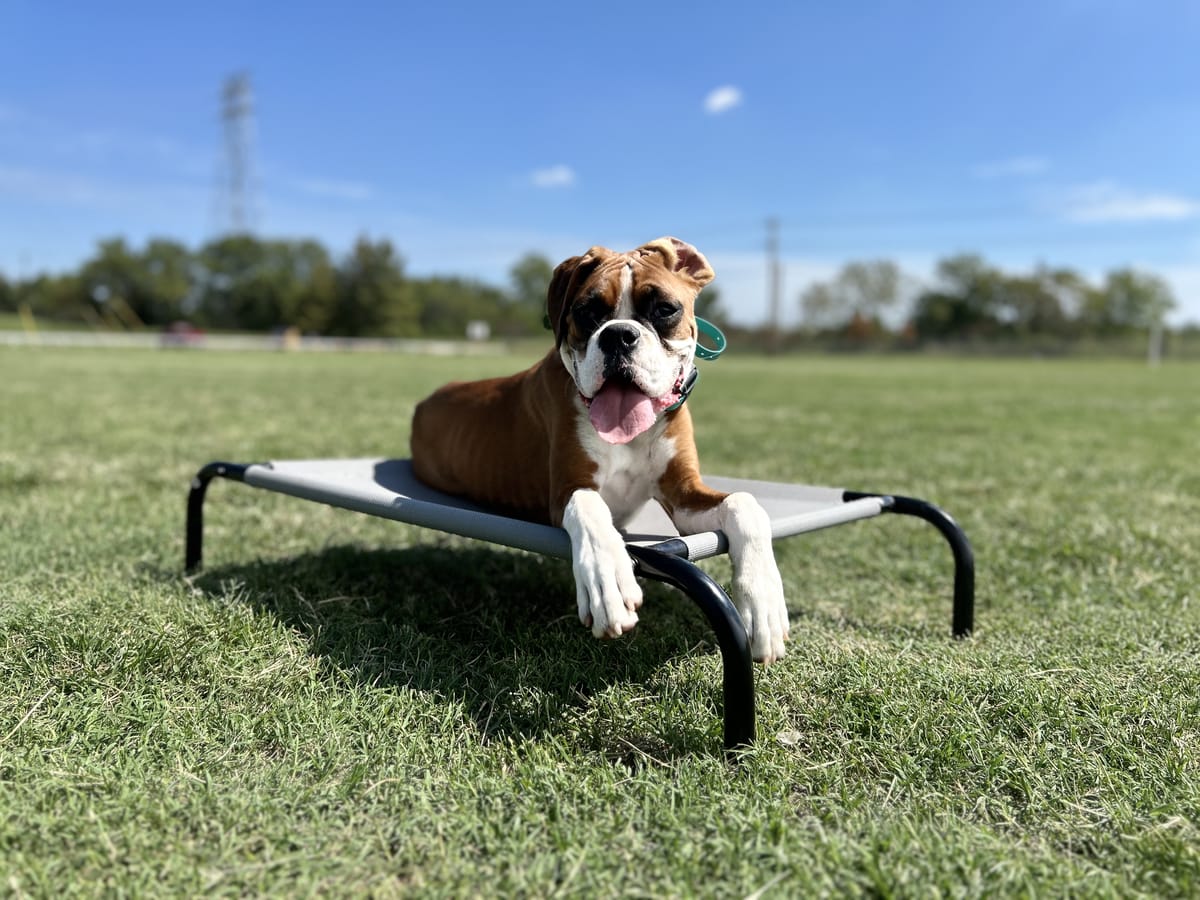
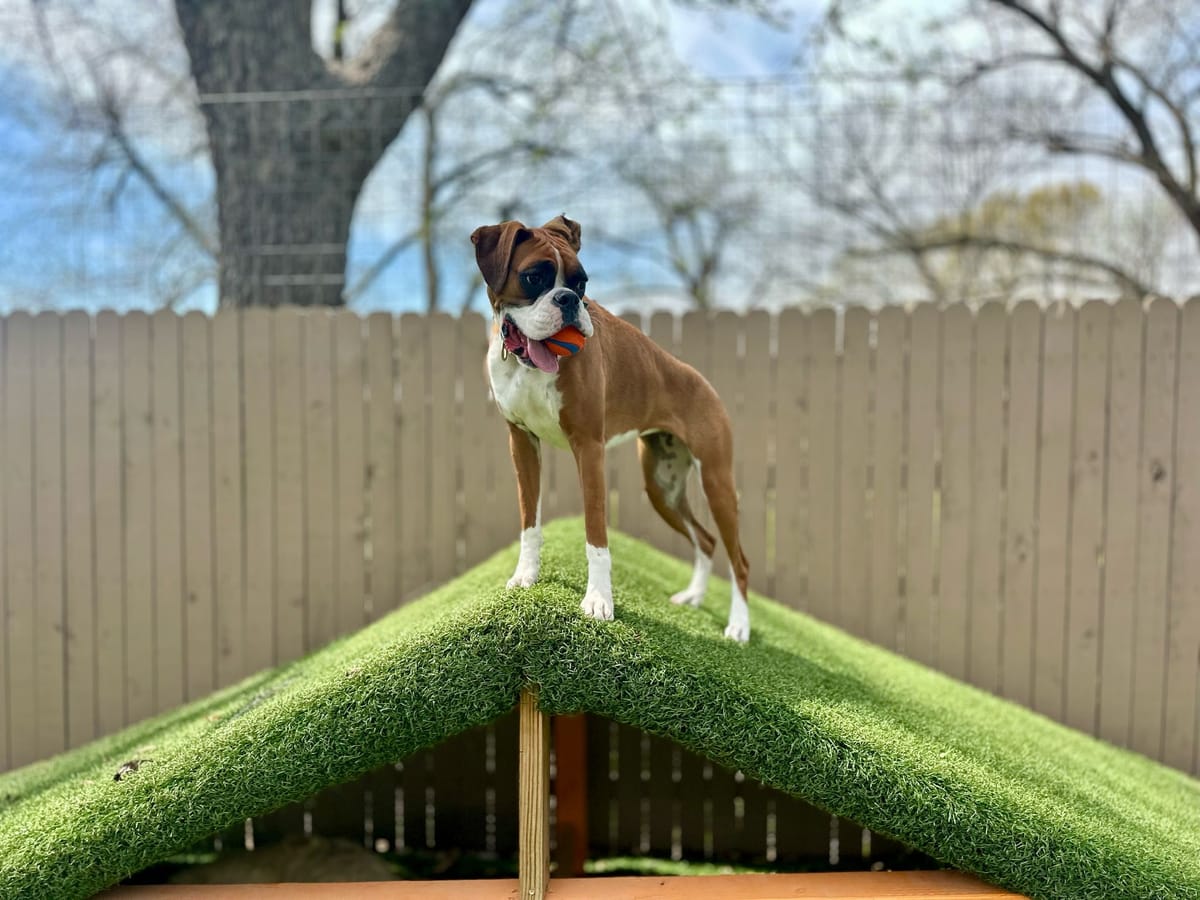
Life at the ranch between sessions
Between lessons your dog plays, rests and builds confidence with the pack on our ranch, then practices household routines in a trainer’s home.
How it works
Book a free consultation call
Tell us what is going on with your dog. You get honest feedback and a clear recommendation.
Get a custom training plan
Program, length, and price matched to your dog's needs and your family's goals.
Board and train — ranch and trainer's home
Your dog splits time between structured ranch training and one-on-one care in a trainer's home.
Owner coaching at handoff
You learn the tools, the commands, and how to maintain the structure at home.
Lasting results at home
The calm carries into daily life, and our team stays available when questions come up.
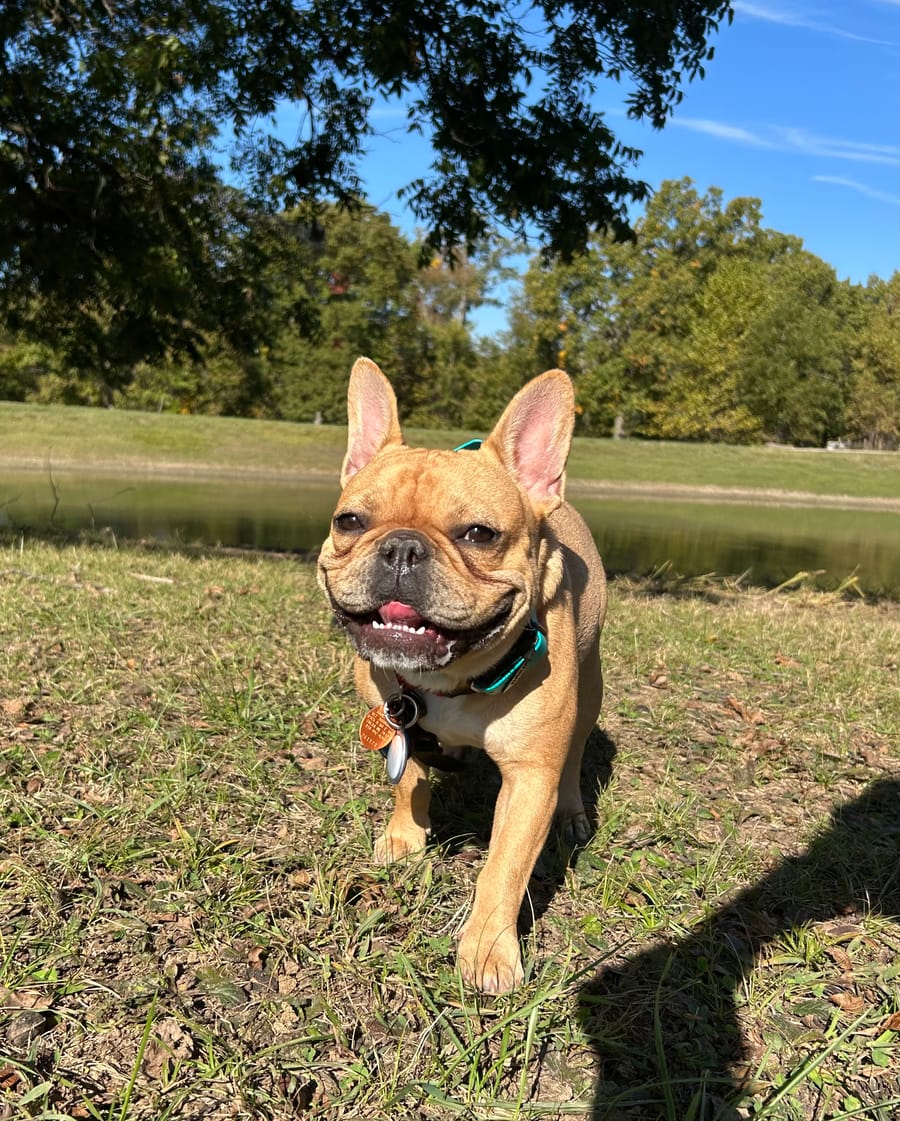
Training built from experience
Hayden Fullingim developed A Peaceful Pack's methods through work with thousands of dogs from across the nation.
Our trainers use that shared curriculum, adapt the plan to your dog and coach you through the same skills at home.
Frequently asked questions
How much does dog training cost in Tulsa?
Two-week Obedience Training is $3,200. Our flagship three-week Real-World Training is $4,200, and Puppy Training (three to four weeks) starts at $4,200. Our 4-week programs — Aggression & Reactivity, Separation Anxiety, and Therapy & Emotional Support — are $5,200 each. Training and boarding are included, and extra weeks can be added when a dog needs them. The free consultation call tells you which program and length fit your dog.
What training methods do you use?
A balanced approach: positive reinforcement — food, praise, play — builds the behaviors you want; clear, fair pressure (leash guidance and, when appropriate, properly conditioned tools) addresses the ones you don't. We also teach settling and recovery in everyday situations. We explain exactly which methods and tools we'd use for your dog before you enroll, and you practice them with us at handoff.
Do you customize training for each dog?
Yes. Every dog has a different temperament, history, and set of challenges. We tailor each plan to your dog and your family's goals so the training is effective, sustainable, and easy to continue at home.
Do you offer pickup and drop-off in Tulsa and surrounding areas?
Yes. During the program we pick your dog up at home on Monday and, if you'd like your dog home for the weekend, bring them back Saturday (or Friday), with no pickup fee within 20 minutes of Tulsa; farther out, we add a gas and travel-time fee. Owner lessons can happen at your home, at the ranch, or at a spot in town that works for you, so you never have to drive to Skiatook unless you want to.
How do I reserve a spot?
Start with the free consultation call. If it's a fit, a $1,200 deposit per dog holds your dates (spots fill first-come, first-served). The remaining balance is due at the start of training — we collect it when we pick your dog up.
Do you offer payment plans?
Payment plan options may be available after the deposit. Our team reviews them with you on your consultation call.
How long until I see results?
Most families notice improvement within the first few days of a program. Because we pair structured training with owner coaching at handoff, the results tend to come faster and last longer.
Tell us about your dog
Takes 60 seconds. Our consultation team reads every one and calls you back — honest feedback, straight recommendation, even if it isn't us.
- Tell us about your dogAbout a minute, right here.
- Our consultation team reads itThe people who match every dog to the right program.
- We call or text you backWithin one business day, with an honest recommendation.
★★★★★ 200+ Five-Star Reviews · 180-Acre Ranch · Trainer-supervised · BBB A+ Accredited
Prefer to talk now? (918) 760-5286
Serving Tulsa, Owasso, Skiatook and the whole metro
Our ranch sits in Skiatook, just northwest of Tulsa, and we pick dogs up at home across the Tulsa area. Book the free call — honest feedback and a clear plan, even if the answer isn't us.
Serving Tulsa, Owasso, Broken Arrow, Jenks, Bixby, Skiatook, Sand Springs, Sapulpa, Collinsville, Claremore.